
Composite Decking Ideas for Gardens in South Wales
- Ellis Decks LTD
- Apr 13
- 8 min read
If you are planning a new deck, getting the design right is just as important as choosing the material.
Composite decking has become a popular choice in South Wales because it handles wet weather well, requires less maintenance than timber and works across a wide range of garden styles. Whether you have a small terrace in Cardiff or a larger garden in a more rural area, there are plenty of ways to design a deck that fits your space.
If you are new to composite decking, you can read our guide on how Trex composite decking works to understand why it performs so well in UK gardens.
The best ideas are not just about how the deck looks. They focus on how the space is used, how it performs in damp conditions and how easy it is to maintain over time.
At Ellis Decks LTD, we design and install composite decking across South Wales as a TrexPro Gold installer, creating decks that are built for both everyday use and long-term durability. We also offer a 3D design service, so you can see how your decking will look and function in your garden before the build begins.
If you want to see how different designs look in real gardens, you can explore our Projects page or learn more about our composite decking services.
Why Composite Decking Works Well in South Wales
South Wales weather can be unpredictable. Rain, damp conditions and changing temperatures all affect how outdoor spaces perform.
Composite decking is designed to handle these conditions better than traditional timber.
It is resistant to moisture, which means it is less likely to warp, crack or rot over time. This makes it a reliable option for gardens that stay damp for long periods, especially in shaded areas.
Many composite boards are also designed with textured, slip-resistant surfaces. This is useful in a climate where decks are often wet underfoot.
Another advantage is maintenance. Composite decking does not need regular staining or sealing. Most homeowners only need to clean it occasionally to keep it looking good.
Because of this combination of durability, safety and low maintenance, composite decking is a practical choice for gardens across South Wales, whether the space is small, sloped or exposed to the elements.
If you want to understand how composite decking performs in wet conditions, it’s worth looking at common composite decking issues in South Wales and how they are avoided.
Simple Composite Decking Ideas That Work in Real Gardens
Create a Seating Area
One of the most effective decking ideas is also one of the simplest.
A clean, rectangular deck with a defined seating area works well in most gardens. This could be a space for outdoor furniture, a dining table or even built-in seating.
It suits both small and medium-sized gardens and creates a clear focal point without overcomplicating the design.
If you want to see how this looks in practice, you can explore our Projects page, where many decks are designed around simple, usable layouts.

Use Multi-Level Decking for Sloped Gardens
Many gardens in South Wales are not perfectly flat.
Instead of trying to level the entire space, multi-level decking can work with the natural slope. By adding steps or split levels, you can create separate areas for relaxing, dining or planting.
This approach not only solves a practical problem but also adds visual interest to the garden.
It is a popular choice for properties where the layout would otherwise limit how the space can be used.
Add Built-In Planters
Planters are a simple way to soften the look of composite decking.
Built-in planters can be added around the edges of the deck or used to define different areas. They help blend the decking into the rest of the garden and add a more natural feel to the space.
This works particularly well if you want a modern deck without it feeling too hard or minimal.

Add Deck Lighting
Lighting can make a big difference to how a deck is used.
Low-level lighting along the edges, steps or seating areas helps improve visibility and safety, especially during darker evenings and winter months.
It also allows you to use the space for longer, turning the deck into a more practical outdoor area throughout the year.

Choose the Right Colour for Your Space
The colour of the decking can change how the whole garden feels.
Lighter shades, such as grey or sand tones, can make smaller gardens feel more open and less enclosed. This is often a good choice for compact spaces.
Darker colours can create a more modern look and work well in larger gardens or where you want a stronger contrast with surrounding features.
Combine Decking with a Pergola
Adding a pergola can help turn a deck into a defined outdoor space.
It creates a sense of structure and can provide some shelter from the sun or light rain. This is useful in South Wales, where the weather can change quickly.
A pergola can also be used to add lighting, climbing plants or shade coverings, making the deck more flexible throughout the year.
Design Ideas for Small Gardens in South Wales
Designing for a smaller garden is about making the most of the space you have.
Keeping the layout simple is usually the best approach. A clean deck shape with a clear seating area can make the space feel more open and easier to use.
Lighter decking colours can help reflect light and create the feeling of a larger area, especially in gardens that do not get much direct sunlight.
Combining features can also help. For example, using built-in seating or planters reduces the need for extra furniture and keeps the space uncluttered.
In many South Wales gardens, space is limited, so focusing on practical design choices can make a big difference to how the deck looks and feels.
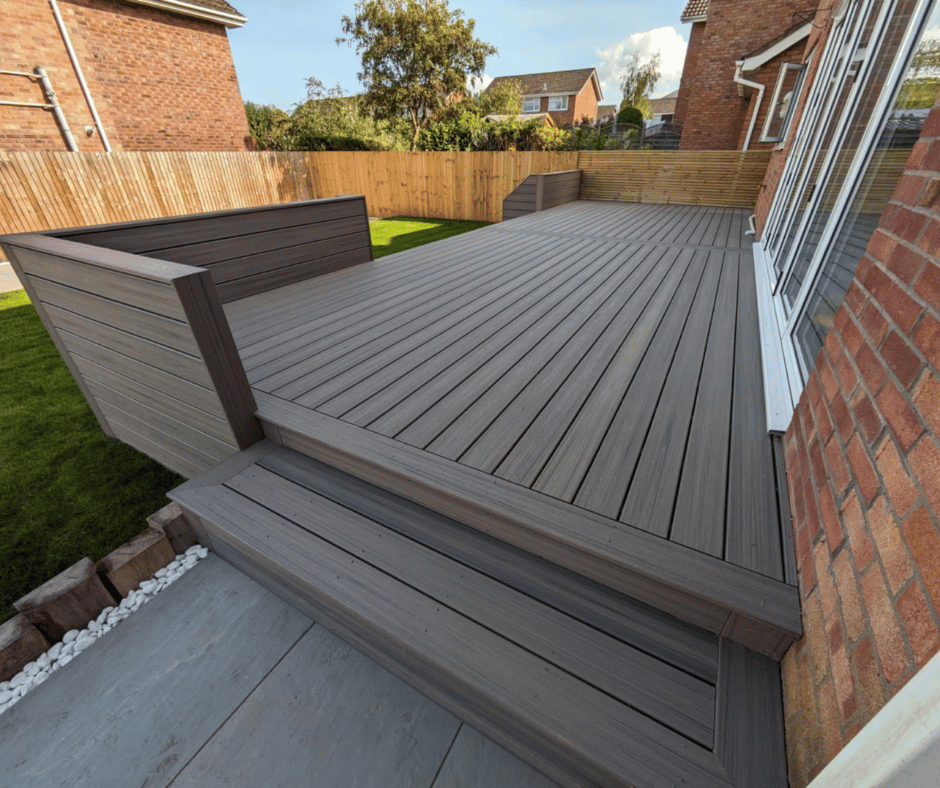
Composite Decking Ideas for Sloped or Difficult Gardens
Sloped or uneven gardens are common in South Wales, but they can still work well with the right decking design.
Multi-level decking is one of the most effective solutions. By creating stepped platforms, you can turn a difficult slope into usable spaces for different activities.
One level might be used for dining, while another becomes a quieter seating area.
Raised decks are another option where ground conditions are uneven or where you want to lift the deck above damp areas. This can improve drainage and help the deck perform better over time.
Steps and transitions between levels also add structure to the garden and make it easier to move through the space.
When designed properly, a sloped garden can become one of the most interesting and functional types of decking layout.
Features That Make a Composite Deck Feel Finished
A well-designed deck is not just about the boards. The details make a big difference.
Built-in seating can help define the space and reduce the need for additional furniture. It also creates a more permanent and considered design.
Planters add texture and help connect the decking with the rest of the garden.
They are a simple way to introduce greenery without taking up extra space.
Lighting improves both safety and usability. It highlights steps and edges while allowing the deck to be used in the evening.
Finishing details like edging and trim give the deck a clean, complete look. These small elements help tie the whole design together and make the space feel more polished.
When these features are included from the start, the result is a deck that feels more like an extension of the home rather than just an outdoor platform.
What to Consider Before Choosing a Deck Design
Before deciding on a design, it is worth thinking about how the deck will actually be used
.
Garden Size and Layout
The size and shape of your garden will influence what is possible.
A smaller space may benefit from a simple layout, while a larger garden can accommodate multiple levels or zones.
Design choices can also affect the overall cost, especially with features like steps, raised sections or multiple levels. You can read our guide on How Much Does Composite Decking Cost in South Wales? to see how different designs impact pricing.
Sunlight and Shade
Some areas of the garden may receive more sunlight than others.
This can affect where you place seating, dining areas or shaded structures like pergolas. It can also influence your choice of decking colour.
Drainage and Ground Conditions
In South Wales, drainage is an important factor.
The design should allow water to run off easily and avoid areas where moisture can build up. This helps protect both the decking and the structure underneath.
How You Plan to Use the Space
Think about how the deck will be used day to day.
Whether it is for relaxing, entertaining or family use, the layout should reflect this. A well-planned design will make the space more practical and enjoyable over time.
Composite Decking Ideas in South Wales: Real Projects
Seeing real examples can make it easier to understand how different ideas work in practice.
Across South Wales, composite decking is used in a wide range of settings. From small garden seating areas to larger multi-level designs, each project is tailored to the space and how it will be used.
At Ellis Decks LTD, we design and build decks that suit the property and the conditions. This includes considering layout, drainage and long-term performance from the start.

Composite Decking Installation in South Wales
Good design only works if the deck is built properly.
In South Wales, installation needs to account for regular rain, damp ground and changing weather. This means getting the structure, drainage and spacing right from the start.
At Ellis Decks LTD, we install composite decking as a TrexPro Gold installer. If you are not familiar with what this means, you can read our guide on What Is a TrexPro Gold Installer and Why It Matters for Your Deck to understand how certification affects build quality and long-term performance.
We focus on the details that make a difference, including proper support, ventilation and water runoff. This helps prevent common issues and ensures the deck stays stable and low-maintenance.
Get Ideas for Your Garden Deck
If you are planning a decking project, the best ideas come from looking at your own space.
Every garden is different, and the right design depends on layout, size and how you want to use the area. Getting advice early on can help you make the most of the space and avoid costly changes later.
At Ellis Decks LTD, we work with homeowners across South Wales to design decking that fits both the garden and the way it will be used. Our 3D design service allows you to visualise the layout before the build begins, making it easier to refine the design and get it right.
If you would like help planning your deck, you can get in touch through our contact page and we will be happy to talk through your ideas.
Frequently Asked Questions
Is composite decking a good choice for South Wales gardens?
Yes. Composite decking is well suited to South Wales because it handles wet and damp conditions better than timber. It resists moisture, does not rot and stays more stable over time, even in shaded or exposed gardens.
What are the best composite decking ideas for small gardens?
Simple layouts work best. A clean rectangular deck with a defined seating area can make the space feel larger. Lighter colours and built-in features like seating or planters also help keep the area open and uncluttered.
Can composite decking be installed on a sloped garden?
Yes. Sloped gardens are often ideal for multi-level decking. By adding steps or split levels, you can create separate areas for seating, dining or relaxing while working with the natural shape of the garden.
What features improve a composite decking design?
Built-in seating, planters, lighting and pergolas are some of the most effective upgrades. These features make the deck more practical and help it feel like a finished outdoor space rather than just a platform.
Does composite decking need a lot of maintenance?
No. Composite decking is low maintenance compared to timber. It does not need staining or sealing and usually only requires occasional cleaning to keep it looking good.


Comments